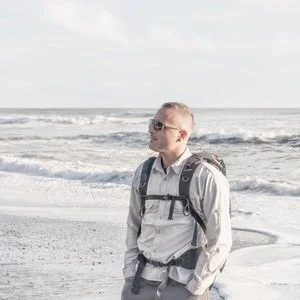
REUBEN WU AND THE CASE FOR SLOWER ATTENTION
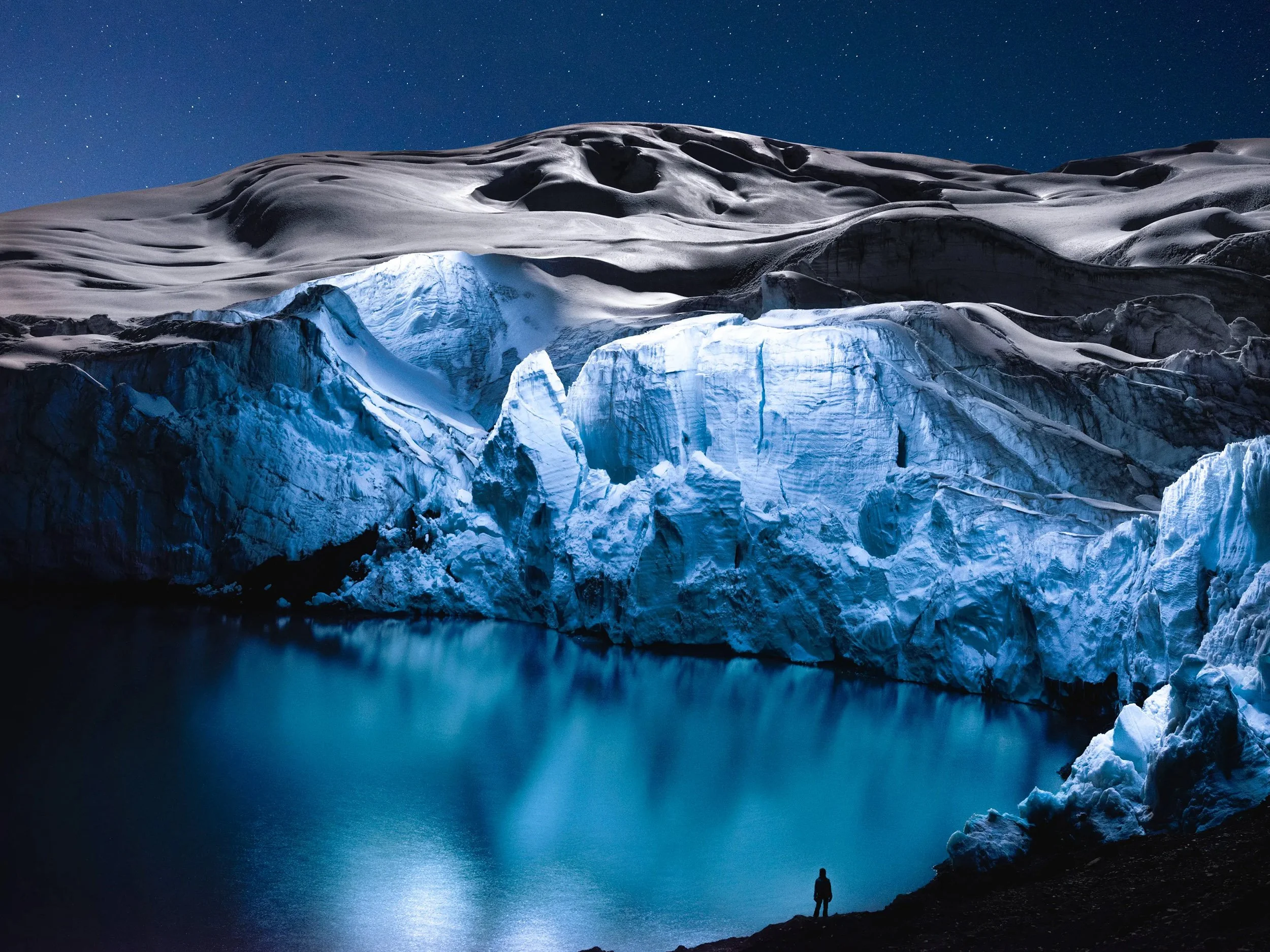
Photo by © Reuben Wu, from the Sea of Ice portfolio. Used with permission.
For most of my career, my attention has been directed inward—toward practice, process, and the long arc of building a photographic life. That focus has been necessary. It’s how you learn to see clearly, how a voice takes shape, and how responsibility enters what you make.
Over the past few years, though, that focus has opened outward.
That openness found a clear expression for me while spending time with the photographs of Reuben Wu. The images hold more the longer you stay with them. They reward careful looking and revisiting, not because they’re obscure, but because they’re built with depth and intention.
Work like this has sharpened how I think about engagement more broadly. Alongside my own practice, I’ve found myself reaching out to a small number of photographers I respect—to spend time with how their photographs are built, and to share those exchanges here when they feel worth bringing into the open.
That impulse is what led me to begin writing long-form features on other photographers. These pieces aren’t profiles or summaries. They’re written to remain close to the work itself, to give it space rather than interpretation, and to take seriously what it asks of both the artist and the viewer.
They’re written slowly, by necessity.
Some work simply doesn’t survive being reduced.
Long-form attention has become increasingly unfashionable—not because it lacks value, but because it resists efficiency. It asks for time without promising resolution. But certain bodies of work aren’t meant to be consumed quickly, and I’ve grown more interested in honoring that resistance than bypassing it.
These features are therefore selective. They sit outside the rhythms that tend to reward speed or output. They don’t announce themselves through metrics. But the absence of immediate reinforcement has never felt like a reason to stop. If anything, it’s clarified why they matter.
Reuben’s work became a particularly clear expression of this.
I’ve followed his photographs for many years and watched them expand in scale and visibility without losing their internal direction. What has always drawn me to the work is its conviction. A visual language that feels unmistakably his, carried forward with care. Each photograph belongs to a longer path, not a momentary effect.
The work resists easy reading. It asks to be met with attention rather than explanation. The questions it raises—about presence, intervention, authorship, and responsibility—aren’t resolved outright. They’re held and shaped over time.
That, ultimately, is what draws me to work like this.
Not answers.
Not certainty.
But the willingness to stay with complexity without rushing to simplify it.
The writing had to move at that same pace—room to unfold, space to breathe, and enough distance to stay close.
If it asks anything of you, it’s simply this:
slow down enough to meet it.
You can read the full feature on Reuben Wu here.

Hi, I’m Scott Reither—fine art photographer, educator, and the founder of The Curated Landscape.
I created this space to share reflections and tools for photographers who want to go deeper—into their craft, their process, and how they connect with the world through the lens.